
The Quest

As a preteen, I picked up a pen pal from Ghana. She told me how she was trying to save money for college. “We don’t go to college unless we have a purpose for it,” I remember writing back. We being conservative Mennonites and purpose being a vital occupation like a doctor or a nurse.
I don’t remember that anyone told me this. I picked it up from observation and a general sense that shimmered in the air, along with anecdotes from articles and sermons about the college educated man who was unable with his jaded eyes and razor words to break the faith of a simple Christian.
Sometime after high school this changed. I wanted to write; I burned with longing to expand my mind; I wanted to know things. But writing didn’t meet my inner criteria of a vital occupation, and you didn’t need a degree for it, anyway. Spending money on a wonder or whim would be frivolous, perhaps dangerous. And people were dying in Africa.
God, teach me to write, I remember praying at this season of my life. I had given up college for him. And while more sophisticated readers may smile sardonically, I sincerely believe he honored that prayer.
But the longing still simmered. I didn’t completely know why. Was it a pure desire for learning? Or did I merely want to rise in the world, to prove my intellectual mettle? I had always been good in school, and among people who think and conceptualize, I knew I could shine.
At twenty-four I audited a creative writing class at our local university, an hour’s drive from my small town in rural Wisconsin. Audited, because paying full price to get academic credit for a class I did not need would be frivolous.
I loved that class. Worlds opened to me. Words expanded like fireworks over my head. And what was most intoxicating—heady, like sipping clear water from Ponce de Leon’s fountain of youth—was the freedom of it, the atmosphere of discovery and question.
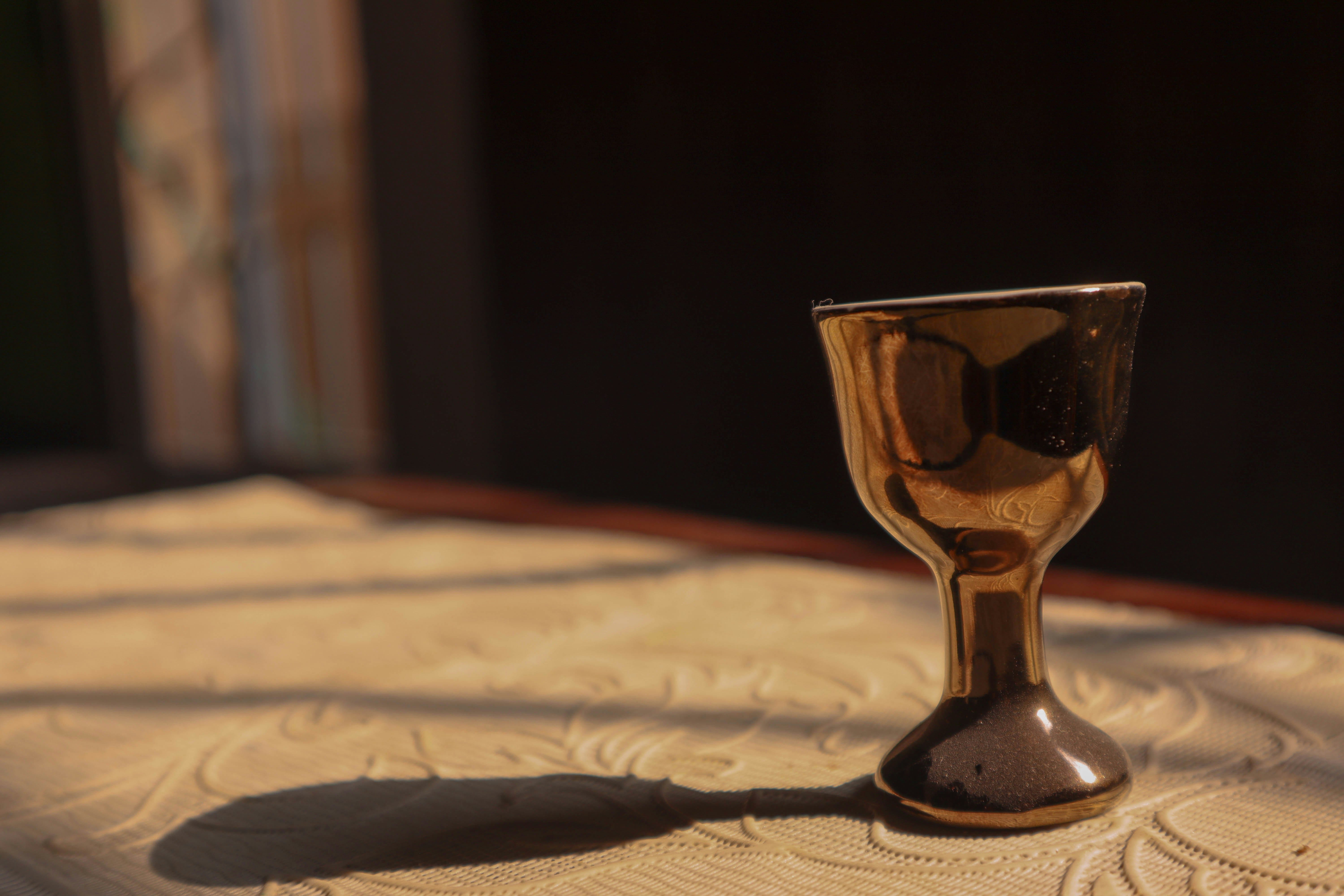
Always before I had been in an atmosphere where every question had a predetermined answer. Yes, one could ask questions and wrestle with God—this was a part of being human—but it only thinly veiled the fact that there were a “right” set of answers, a right trajectory for any human quest to take. After monsters, snakes, and brushes with evil witch ladies, the cup would be found in the place you had always known it to be.
When the solution is predetermined, the quest feels…may I say boring?
As much as I loved that class, it brought me to a crisis of faith perhaps not so different than the anecdotes I had heard. I had never rubbed shoulders closely with non-Christians, or even non-Mennonites, and I began to question everything I had ever learned about God and the Bible. I came out dizzy but with faith intact, but I still longed, more than ever now that I had tasted, for the wide-open questing portal that is college.
Eventually I did return to college, first to Sattler, a college in Boston that aligned well with Anabaptist teaching while still giving my mind room to stretch like a cat and curl its tail around ancient knowledge and new thought. And after marriage, to Lancaster Bible College, a practical choice that allowed me to complete my degree online. I would still like to get my master’s someday.
For now, I am on the other side of the equation. On the brink of homeschooling, with my oldest in kindergarten and many plans in my head about what I want to teach both my children. I find that I love educating—particularly when it’s educating my own children—as much as I ever loved learning.
Why do I want to teach my children? The answer feels purer and simpler.
I want their minds to expand, to wonder, to soak in some of the breadth and height of the universe. I want them to be capable of pursuing their interests and dreams. I want them to have resources and tools to contribute to the cause of humanity. I want them to understand a little bit of the magnitude of God. I want them to gain a worldview that makes sense, that is like bedrock to a questing mind.
Like my parents before me, I will try to give them the answers I have wrested from hard baked soil, the golden flakes of my quest—the grail still lies ahead. And like their parents before them, they will question and surge, choose this way or that, ultimately be influenced more by love than by reason, and come up someplace that I must trust God to lead them.
***
This post was published first in Anabaptist World. Photo by Mahwish Ahmar on Unsplash.
I love these thoughts so well. I will be thinking about that as I teach my own children...how to nurture a sense of freedom and that it's okay to have unanswered questions, that questions can go hand in hand with a deepening faith.
I really love this. And as a veteran homeschool mom, I find that I still have questions, and not too many answers. I wonder how we can nurture the freedom to think deeply, and outside the cultural box- shaped norms, instead of fostering the expectation that the right answer is there, somewhere, and if you just look in the right places, but never turn over certain rocks, you will find that one right answer.
And I feel a tiny sense of relief, because too often, I’m not sure that I know the right answer when we are reading and discussing history and the lives of the very human people who made history. And maybe it’s okay that I don’t. Hopefully, as my children see me grappling with my own questions, they will learn that it’s okay to not know, and that God does not lead His children down a perfectly straight and clear path, but that questions and maybes are okay too. I want my faith to be strong and my beliefs clear, but I also want my children to grow and own their faith as they meet and wrestle with God personally.